
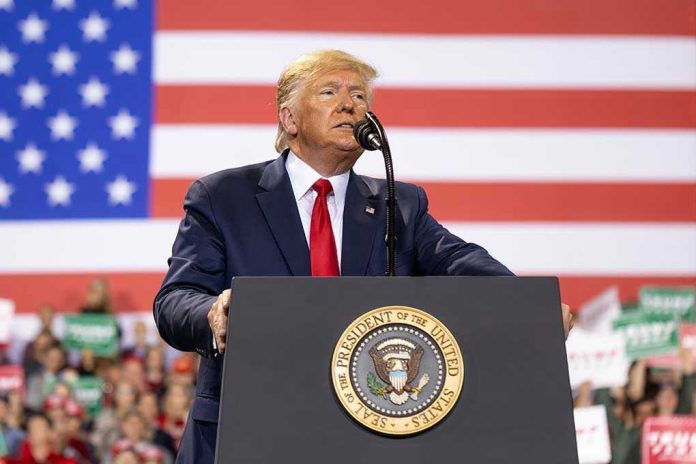
A single State of the Union speech exposed how quickly political narratives can be repackaged—raising a basic question for Americans who still care about truth, accountability, and constitutional limits.
Story Snapshot
- President Joe Biden delivered the 2024 State of the Union on March 7, 2024, but some commentary framed its uplifting themes as “Trump-like” or even misattributed the address.
- Trump reacted in real time on Truth Social, calling it an “Angriest, Least Compassionate, and Worst” speech—underscoring how sharply divided the country remained.
- Biden repeatedly referenced his “predecessor” and tied January 6 to broader global threats, including Russia’s war in Ukraine.
- Immigration and border security stayed central, with Biden arguing for action as Congress remained gridlocked after a bipartisan border effort stalled.
What Actually Happened on March 7, 2024
President Joe Biden delivered his 2024 State of the Union address to a joint session of Congress on March 7, 2024, with Speaker Mike Johnson presiding in a divided Washington. Reporting at the time described the speech as a campaign-stage moment as much as a constitutional duty, with Biden aiming to counter voter doubts about age and stamina. The address blended domestic policy claims with international warnings, while Republicans signaled strong opposition across several issues.
Biden’s message leaned heavily on familiar 2024 talking points: economic “comeback” language, promises to fight consumer costs like “shrinkflation” and “junk fees,” and a call for more action tied to manufacturing investment. The speech also featured sharp political contrasts, including repeated references to his “predecessor.” That choice mattered because it turned a required constitutional update into a quasi-debate frame—less about unifying Congress and more about prosecuting an election argument.
The Narrative Battle: “Trump’s SOTU” vs. Biden’s Delivery
Conservative commentator David Krayden published a piece portraying the State of the Union as a testament to American heroes and lasting greatness, but the underlying event was Biden’s address, not Trump’s. The mismatch illustrates a broader media problem: Americans often receive politics through interpretation before they receive plain facts. The reliable bottom line is simple—Biden delivered the speech—while other commentary repackaged the tone, themes, and “hero” vignettes through a pro-Trump lens.
Krayden’s framing emphasized patriotic motifs—service, resilience, and national greatness—echoing the style Americans recognize from Trump-era rhetoric and from prior addresses that spotlight everyday heroes. That interpretive approach can be persuasive because it highlights real, widely shared values. The risk is that it blurs source and accountability: if Biden’s administration owned the policy record Americans were living under, then a feel-good retelling should not obscure which leadership team was actually in charge at the time.
Immigration, Gridlock, and the Limits of Rhetoric
Immigration remained a political flashpoint around the speech, with reporting noting Biden’s weak standing on the issue and the backdrop of a stalled bipartisan border bill. The speech and its aftermath reflected how Washington often substitutes blame for results. Biden used the stage to argue for enforcement and legislative action while pointing at Republicans; Republicans pointed back at Biden’s border policies. The facts available in the provided reporting show continued gridlock, not a breakthrough.
For voters frustrated by illegal immigration and federal overreach, the key question is less about applause lines and more about outcomes: operational border control, lawful entry, and consistent enforcement that respects the Constitution. The research does not provide detailed policy text from the address itself, so any evaluation must stay limited to what was reported: immigration was central, voters were dissatisfied, and Congress remained stuck after the speech. That gap between messaging and measurable change fueled the broader public skepticism.
January 6, Ukraine, and the “Threat” Framework
Biden’s address repeatedly invoked January 6 and tied domestic political conflict to foreign policy, including Russia’s invasion of Ukraine. Coverage described this as a deliberate attempt to frame the election as a referendum on democracy and global leadership. This approach also functioned as a rhetorical tool: by linking opponents to a “threat” narrative, the administration sought moral urgency for its agenda. The sources provided do not show any immediate legislative progress following the address.
Trump’s immediate response on Truth Social attacked the speech as angry and lacking compassion, reflecting the harsh tone of 2024-era politics. The bigger takeaway for 2026 readers is how these moments shaped public trust: high-stakes language, constant “crisis” framing, and media spin competed with day-to-day concerns like prices and border security. The research indicates that the speech energized partisans, but it did not resolve the core policy disputes that defined that election year.
Sources:
2024 state of the union address biden