Trump’s stark warning to Iran’s supreme leader — “we’ll start shooting too” — marks one of the clearest American lines in the sand against a brutal theocratic regime cracking down on its own people.
Story Highlights
- Nationwide Iranian protests over economic misery have exploded into open revolt against the Islamic Republic’s clerical rule.
- Ayatollah Khamenei’s regime is threatening protesters with death-penalty charges and unleashing a harsh security crackdown.
- Donald Trump has issued an unusually direct warning that if Iran starts massacring protesters, the United States will hit back “very, very hard.”
- Exiled Crown Prince Reza Pahlavi is urging Iranians to seize city centers, raising questions about the regime’s future and Western responses.
Trump’s Warning Draws a Red Line on Regime Violence
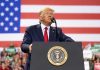
As protests sweep Iran for the thirteenth consecutive night, Donald Trump has delivered a message the mullahs in Tehran are not used to hearing from Washington: if the regime starts gunning down its own people, America will “start shooting too.” The former president tied any U.S. military response directly to the killing of demonstrators, stressing that the United States would strike Iran “very, very hard where it hurts,” without committing American troops to another ground war.
For many American conservatives, this clarity stands in sharp contrast to years of mealy-mouthed diplomatic language and cash-for-clerics deals. Instead of appeasing Tehran’s rulers, Trump is explicitly siding with ordinary Iranians demanding an end to authoritarian religious rule. His warning does more than signal outrage; it tries to deter another massacre like past crackdowns that left hundreds dead while Western elites issued statements but did little to raise the cost for the regime’s enforcers.
Iranian Protesters Challenge a Theocratic Police State
On the streets of Tehran and cities across Iran, demonstrators who first marched over inflation, joblessness, and spiraling living costs are now chanting for the end of clerical rule itself. Crowds shout “Death to Khamenei,” directly targeting the supreme leader who sits atop Iran’s security and religious hierarchy. These are not small, isolated gatherings; they represent the most serious challenge to the Islamic Republic in years, fueled by decades of corruption, economic decay, and suffocating social controls.
Iran’s rulers are responding as they have in past uprisings: with batons, bullets, and blackout tactics. Security forces tied to the Revolutionary Guard and Basij militias are deployed in key cities, while authorities impose near-total internet and communications shutdowns to hide the scale of unrest. Human-rights monitors working through underground contacts estimate dozens killed and hundreds arrested. Prosecutors warn protesters they can be charged as “enemies of God,” a label that carries the death penalty and is designed to terrorize families into silence.
Khamenei’s Regime Plays the Foreign Boogeyman Card
Ayatollah Ali Khamenei has finally stepped forward publicly, not to address his people’s grievances but to smear them as vandals and foreign mercenaries. In speeches and state media, he claims demonstrators are serving outside powers and trying to please Donald Trump, recycling a playbook familiar to anyone who has watched socialist or Islamist regimes blame unrest on America instead of admitting policy failure. The message to security forces is clear: treat these protesters as traitors, not citizens with legitimate demands.
Iran’s judiciary chief and Tehran prosecutors are echoing that hard line, promising “decisive, maximum” punishment without legal leniency. They threaten anyone accused of damaging property with capital offenses, effectively equating breaking a window with waging war on God. For an American audience that values due process and constitutional protections, these tactics underscore the gulf between a constitutional republic and a revolutionary theocracy that answers dissent with religiously cloaked terror.
Exiled Crown Prince Pahlavi Presses for Seizing City Centers
From abroad, exiled Crown Prince Reza Pahlavi is seizing this moment to encourage Iranians not just to march, but to seize and hold their city centers. As the son of the last Shah, he presents himself as an alternative leadership figure, openly declaring that he is preparing to return and that his homecoming is near. His calls echo through social media channels that Iranians access whenever brief breaks in the blackout allow them to share videos and messages.
Inside Iran, however, the protest movement remains decentralized, without a single recognized leader. That decentralization makes it harder for the regime to decapitate the opposition, but it also complicates any path toward an organized transition. For Americans watching from a distance, the dynamic raises familiar questions: can a spontaneous popular uprising overcome a heavily armed state without outside pressure, and will Western governments support the people or worry more about offending an entrenched dictatorship?
Trump’s blunt warning adds a new trigger point to an already volatile U.S.–Iran relationship. For years, flashpoints centered on nuclear activity and proxy attacks in the region. Now, the killing of Iranian protesters is explicitly tied to potential U.S. military action. That linkage raises the stakes for Khamenei and his generals. If they repeat past mass shootings, they must now factor in possible strikes that hit command centers, economic lifelines, or military assets they rely on to project power.
Sources:
Trump warns Ayatollah ‘we will start shooting if you do’ as Iran rocked by another night of protests