Iran’s latest threat makes clear this war is edging toward a dangerous new phase where Americans could be targeted not just on bases, but in civilian-linked spaces across the region.
Story Snapshot
- Iran’s parliament speaker warned U.S. troops would be “set on fire” if America launches a ground invasion, signaling Tehran’s focus on deterring boots on the ground.
- Iran’s Revolutionary Guard threatened U.S. and Israeli university branches in the region unless Washington condemns Israeli strikes on Iranian universities by March 30.
- U.S. airstrikes hit Tehran as the conflict reached roughly its 30th day, while 2,500 U.S. Marines recently arrived in the region.
- Diplomacy ran through Pakistan with a reported U.S. 15-point plan that Iran dismissed, even as regional mediators pressed for a framework.
Iran’s “Set on Fire” Warning Aims to Block a Ground War
Mohammad Bagher Ghalibaf, Iran’s parliament speaker, issued a direct warning on March 29 that Iranian forces are “waiting for the arrival of American troops on the ground” and would “set them on fire” if the U.S. launches a ground invasion. Iranian messaging paired that threat with vows to keep firing missiles and to punish U.S. “regional partners.” The intent appears deterrent: make the political cost of ground escalation unbearable before it starts.
President Trump, now in his second term, has publicly projected confidence that Iran is weakening and that pressure can force a deal. At the same time, the movement that powered his comeback is split: many voters who backed “no new wars” are wary of another open-ended conflict, especially one that could slide into occupation-style commitments. The research provided shows Washington is keeping military options open, but it does not confirm any final decision toward a ground invasion.
Universities Enter the Target List as the Conflict Spreads Beyond Bases
Iran’s Revolutionary Guard added a new and unsettling layer by threatening attacks on U.S. and Israeli university branches operating in the region unless the United States condemns Israeli strikes on Iranian universities by March 30. The reporting describes this as the first explicit Iranian threat aimed at foreign universities rather than purely military sites. In response to the threat environment, the U.S. Embassy in Baghdad warned of potential attacks on American-associated universities in Iraq.
The stated Iranian grievance centers on Israeli strikes on Iranian universities alleged to be linked to weapons development. The sources describe campuses shifting to online instruction due to regional violence and security risks. For Americans, the headline issue is broader than education: once civilian-linked institutions become bargaining chips, the targeting logic tends to expand. That raises hard questions about how U.S. leaders protect Americans abroad without escalating into a wider, less controllable conflict.
Diplomacy Runs Through Pakistan, but Tehran Rejects U.S. Terms
Regional diplomats worked through Pakistan on March 29 as foreign ministers from Saudi Arabia, Turkey, and Egypt discussed a framework for U.S.-Iran talks. The research indicates the U.S. relayed a 15-point peace plan via Pakistan, but Iranian officials dismissed it as “their wishes.” Meanwhile, airstrikes continued and public statements hardened. That combination—active backchannel diplomacy plus ongoing strikes—signals both sides are trying to negotiate from strength.
For conservative voters who remember “forever war” justifications from prior eras, the key detail is what is not yet clear: the sources do not lay out the precise conditions that would end the conflict, nor do they confirm whether either side is willing to accept a durable settlement soon. Without defined political objectives and off-ramps, limited actions can become indefinite commitments, and that is exactly what many Trump voters believed they were voting against.
Energy Shock and Shipping Disruption Hit Home as the War Drags On
The conflict’s economic blast radius is tied to chokepoints and proxy pressure. The research notes disruption to global oil flows and shipping risks connected to the Strait of Hormuz and Houthi threats near the Bab el-Mandeb Strait, contributing to spiking energy prices. For a base already angry about inflation and fiscal mismanagement, higher fuel costs feel like a direct household tax. Even voters who support strong national defense are increasingly demanding clear limits and measurable outcomes.
50,000 AMERICAN TROOPS IN MIDEAST
IRAN WARNS INVADERS FACE FIRE
TRUMP: 'I WILL UNLEASH HELL'
HEGSETH PRAISES JESUS
RUSSIA SHARING SATELLITE IMAGES
F-16S SCRAMBLE ABOVE MAR-A-LAGO
OIL OPENS WEEK UP— MOUNTAIN HIGH TIME / Ransom Godwin (@DOMESTIC_TERROR) March 30, 2026
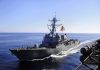
Military moves add to uncertainty. The reporting cites 2,500 U.S. Marines recently arriving in the Middle East and notes the USS Tripoli entered the U.S. Central Command area days earlier. Iran’s rhetoric appears designed to preempt any “mission creep” into a ground campaign by raising the perceived cost in American lives and regional blowback. The sources also acknowledge limits: there is no independent verification that Tehran will carry out the university threat by the stated deadline.
Sources:
Iran warns U.S. against ground operation