After years of allies leaning on American protection, President Trump is openly warning that free-riding on U.S. power won’t be tolerated when global energy security is on the line.
Quick Take
- Trump says some allied nations are not “enthusiastic” about helping reopen the Strait of Hormuz after Iranian attacks disrupted shipping.
- Oil prices climbed to about $105 a barrel as the closure tightened global energy supply and rattled markets.
- The U.K. rejected joining a wider war and stressed the effort to reopen the Strait would not be a NATO mission.
- Trump says he contacted about seven countries and implied reluctance to help could affect NATO’s future dynamics.
Trump pressures allies as Hormuz disruption hits energy markets
President Trump used a Washington, D.C., news conference on March 16, 2026, to criticize U.S. partners for what he described as lukewarm participation in an effort to reopen the Strait of Hormuz, a major global shipping chokepoint. The waterway’s disruption has pushed oil prices toward $105 per barrel and intensified pressure on governments reliant on stable maritime trade. Trump said multiple countries signaled they were “on the way,” while others appeared hesitant.
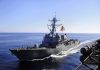
Trump framed the ask as straightforward: nations that depend on open sea lanes and long-standing U.S. security guarantees should contribute tangible capabilities, such as mine-sweeping ships, to clear threats and restore commercial movement. He argued the burden should not fall almost entirely on American forces when the economic payoff—lower oil prices and steadier trade—would be broadly shared. He also highlighted the scale of U.S. global posture, noting that some allies host large numbers of American troops.
Allied responses show political constraints and NATO sensitivity
Public responses from key governments underline why Trump’s call for ships has turned into a test of alliance politics. British Prime Minister Keir Starmer rejected being drawn into a wider war and said any push to reopen the Strait would not be run as a NATO mission. In practical terms, Starmer also limited access to British bases to defensive operations only, citing domestic opposition and concerns about escalation beyond a narrow maritime mission.
European officials signaled discussion without commitment. EU foreign policy chief Kaja Kallas said the bloc was talking through options to help unblock the Strait, but no firm deployment was announced in the reporting available. In Asia, Japan pointed to laws that tightly restrict overseas military activity, suggesting the operation might not meet legal requirements. South Korea indicated it was considering the request. Australia said it had not been asked and would not send ships.
China’s stance and Trump’s leverage: trade dependence without military buy-in
China, as a major oil importer, has a clear economic interest in a functioning Strait of Hormuz, yet its public posture remained cautious. Chinese officials emphasized that keeping the Strait open matters to international trade and urged an end to hostilities, but they did not commit to providing naval forces. Trump signaled he may tie Beijing’s decision to broader diplomacy, suggesting his planned end-of-month trip could depend on whether China steps up in a meaningful way.
Military posture and claims of progress come with verification limits
Trump described an expansive campaign against Iranian capabilities, saying U.S. strikes hit more than 7,000 targets and sharply reduced ballistic missile launches and drone attacks. He also claimed more than 100 Iranian naval vessels were “sunk or destroyed,” including 30 mine-laying ships. Separately, reporting said the U.S. deployed 2,500 Marines and an amphibious assault ship to the region. Trump predicted energy prices would fall after the Strait reopens, without offering a timeline.
What this means for voters focused on burden-sharing and sovereignty
The dispute is less about rhetoric and more about accountability: Trump is putting alliance burden-sharing on the table in a concrete, measurable way—send assets, or explain why not. That approach will resonate with Americans who watched previous administrations spend heavily overseas while accepting vague commitments in return. At the same time, the reporting leaves key details unresolved, including which countries agreed to help and what contingency plan exists if the coalition remains thin.
UPDATE: Trump says some countries not 'enthusiastic' about Hormuz help, adding 'enthusiasm matters to me'
🔴 LIVE updates: https://t.co/nJ49b2vjF9 pic.twitter.com/JwjM8fDrdf
— Al Jazeera Breaking News (@AJENews) March 16, 2026
Secretary of State Marco Rubio and other administration officials were expected to announce which countries will assist. Until that list is public, Trump’s “enthusiastic” versus “not enthusiastic” divide remains hard to verify country-by-country. Still, the immediate stakes are clear: the Strait of Hormuz typically carries roughly one-fifth of the world’s oil, and disruptions can hit family budgets through gasoline and heating costs. The next announcements will show whether allied capitals treat energy security as shared responsibility—or as America’s job alone.
Sources:
CBS News Live Updates: Iran war, oil prices, Strait of Hormuz, Trump threat, Kharg Island
Trump threatens NATO allies over Strait of Hormuz help
Trump says some countries not ‘enthusiastic’ about Hormuz help