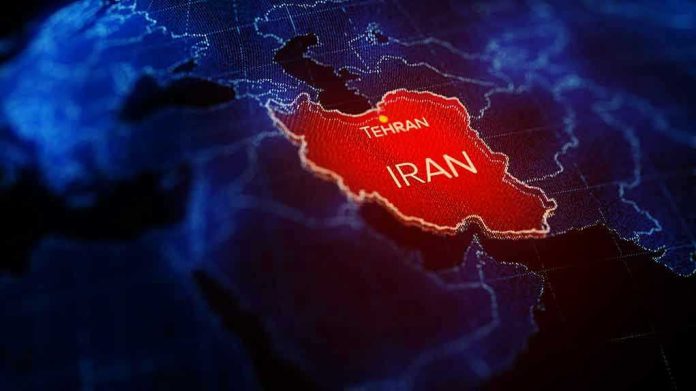
A former Iranian Prime Minister under house arrest for 14 years has broken his silence to declare the regime’s time is over, delivering a symbolic blow to Tehran’s ruling clerics as nationwide protests expose the Islamic Republic’s deepening legitimacy crisis.
Story at a Glance
- Mir-Hossein Mousavi, imprisoned since 2011, issued statement declaring “Enough is enough. The game is over” against Iran’s leadership
- Protests sparked by currency collapse have spread across all 31 provinces, with 42 killed and over 2,270 detained
- Young Iranians chant “Not Gaza, not Lebanon, my life for Iran,” rejecting regime’s foreign military priorities over domestic needs
- Experts warn traditional regime strategies of repression may be reaching limits as generational frustration boils over
Silenced Voice Speaks Out Against Regime
Former Prime Minister Mir-Hossein Mousavi delivered a defiant message through his Kalame media outlet in late January 2026, declaring “Enough is enough. The game is over” to Iran’s ruling establishment. Mousavi, who served as Prime Minister from 1981 to 1989 during the Iran-Iraq War, has been under house arrest since 2011 for challenging the regime. His statement represents a rare public intervention from a historically significant opposition figure at a moment when the Islamic Republic faces its most serious internal challenge in decades.
Economic Collapse Triggers Nationwide Uprising
Protests erupted on December 28, 2025, at Tehran’s Grand Bazaar after the Iranian rial plummeted to approximately 1.4 million per dollar, devastating ordinary citizens’ purchasing power. The demonstrations rapidly spread across all 31 provinces, distinguishing this uprising from previous protest cycles that remained more localized. Young Iranians, facing chronic unemployment and inflation, have directed their anger at the regime’s spending priorities. Verified footage shows protesters chanting “Death to the dictator” and “Not Gaza, not Lebanon, my life for Iran,” expressing frustration that Tehran supports foreign militant groups while domestic conditions deteriorate.
'Enough is enough. The game is over,' #Iran ex-PM tells leadership | New Straits Times https://t.co/TpMvjuA1Qx
— The Cat 🇮🇪🇲🇾🇬🇧🌿🍀🌱 (@wong_denton) January 29, 2026
The Human Rights Activists News Agency reports at least 42 people have been killed and over 2,270 detained as security forces deploy tear gas and live ammunition against demonstrators. Four security personnel have also died in the clashes. The government implemented an internet blackout on January 8 to prevent protesters from coordinating, though this has not stopped the demonstrations from continuing into their second month. Unverified footage showing seminary students abandoning religious institutions to join protesters represents a symbolically devastating challenge to the clerical regime’s religious authority.
Generational Divide Threatens Regime Survival
Iran’s demographic composition creates inherent instability for the aging theocracy. Sixty percent of the population is below age 39, according to United Nations data, meaning most Iranians have no memory of the 1979 Islamic Revolution that established the current system. This younger generation expresses little patience for the regime’s revolutionary ideology or its enforcement of social restrictions like mandatory hijab laws, which have become increasingly ignored. Alex Vatanka, director of the Iran Program at the Middle East Institute, warns that “The collapse is not just of the rial, but of trust,” noting the regime’s traditional strategies of “repression and tactical retreats” may be “reaching its limits.”
Regime Faces Perfect Storm of Challenges
Supreme Leader Ayatollah Ali Khamenei, now 86 or 87 years old, has responded defiantly, vowing Iran “will not yield to the enemy” and framing protests as foreign-instigated sedition. Yet the regime confronts multiple simultaneous crises: economic devastation from sanctions, military conflicts with Israel and the United States, eroding social authority as women openly defy hijab laws, and now a prominent former official declaring the system’s time has ended. President Trump issued a “locked and loaded” warning on January 2, threatening intervention if security forces continue killing protesters, though foreign involvement remains deeply unpopular among Iranians due to historical memory of past interference.
Analysts observe this uprising differs qualitatively from the 2022-23 protests following Mahsa Amini’s death, which focused primarily on women’s rights and social freedoms. The current wave combines economic grievances with systemic rejection of the regime itself, attracting diverse demographics including unemployed graduates, shopkeepers, and even seminary students. Vatanka’s assessment that “change looks inevitable” and “regime collapse is possible, though not guaranteed” reflects expert consensus that the Islamic Republic faces an unprecedented legitimacy crisis. For Americans who remember the 1979 hostage crisis and have watched Iran’s rulers threaten regional stability for decades, these protests offer hope that the Iranian people themselves may finally end the theocratic regime’s grip on power.
Sources:
Spreading protests expose legitimacy crisis for Iran’s leadership – Daily Sabah
‘Enough is enough. The game is over,’ Iran ex-PM tells leadership – New Straits Times
Iran’s Protest Movement and Diaspora Politics – New Lines Magazine
Iran Protests: Trump, Tehran, Economic Crisis, Currency, Inflation – Radio Free Europe/Radio Liberty