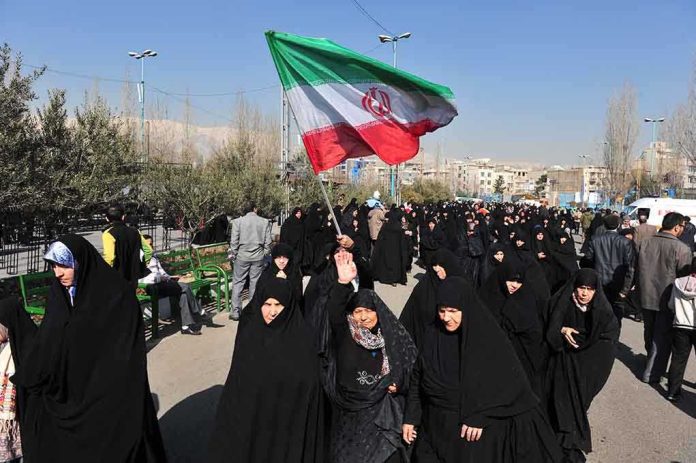
The largest wave of protests since 2022 erupts in Iran, challenging the regime’s foundations as the economic crisis deepens.
Story Highlights
- Protests have spread to over 100 cities, demanding regime change.
- Triggered by economic collapse and inflation exceeding 40%.
- Protesters face severe repression, with reports of over a thousand arrests.
- International concern grows over Iran’s human rights situation.
Iran’s Economic Collapse Sparks Nationwide Uprising
Beginning on December 28, 2025, shopkeepers and merchants in Tehran initiated strikes over soaring inflation and the collapsing rial. This quickly spread into a nationwide movement against the regime, involving bazzaris, students, women, and youth across over 100 cities. The protests now represent a new phase in Iran’s political struggle, with explicit calls for the overthrow of Supreme Leader Ali Khamenei.
Despite heavy security presence and the use of tear gas and live ammunition, the protests have only intensified. By early January 2026, the situation escalated with reports of at least dozens killed and over a thousand arrested. The Iranian government has attempted to suppress the movement by shutting down internet access and closing provinces under the guise of “cold weather.”
The Role of Bazaar Merchants and Students
The bazaar merchants’ participation is particularly significant, as they were a key pillar of the 1979 revolution. Their strikes against the very system they once supported underscore a profound legitimacy crisis for the regime. Meanwhile, students have been at the forefront of protests at major universities, demanding political freedoms and social rights. Women also play a crucial role, continuing the gender-based resistance seen in the 2022 Mahsa Amini protests.
The protests have maintained momentum despite severe repression, with demonstrators employing tactics such as night-time street protests and targeting symbols of authority. Their demands have expanded from economic grievances to calls for systemic political change, resonating particularly with the young population facing high unemployment and digital censorship.
International Reactions and Future Implications
The international community, including the U.S. and European governments, has expressed concern over the Iranian regime’s harsh crackdown. The U.S. State Department has condemned the violence and arrests, highlighting the ongoing human rights violations. Opposition figures and diaspora organizations are amplifying calls for regime change, describing the protests as a nationwide uprising.
The protests’ persistence suggests deep-rooted grievances that the regime has failed to address. The defection of traditional support bases, like the bazaar merchants, combined with growing international scrutiny, indicates a challenging road ahead for the Iranian regime. As the situation unfolds, the potential for more violent confrontations looms, with possible shifts in Iran’s political landscape.
Sources:
Wikipedia: 2025–2026 Iranian Protests
NCRI: Iran News in Brief, January 7, 2026
Britannica: 2026 Iranian Protests
Understanding War: Iran Update, January 5, 2026