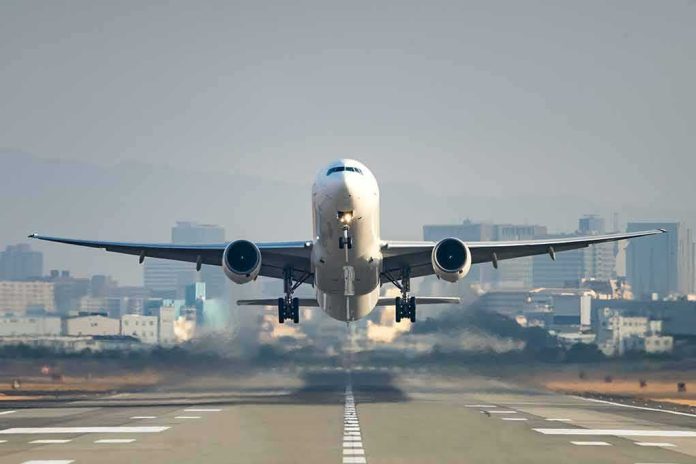
A U.S. Air Force tanker operating without a transponder nearly collided with a JetBlue flight, raising alarms about military presence in civilian airspace.
Story Snapshot
- A JetBlue flight had a near-miss with a U.S. Air Force tanker lacking an active transponder.
- The incident occurred north of Venezuela amid increased U.S. military activity.
- JetBlue reported the safety breach, highlighting aviation risks.
- The Air Force’s stealth operations in civilian airspace come under scrutiny.
JetBlue’s Frightening Encounter with Military Aircraft
On December 12, 2025, a JetBlue Airbus A320 narrowly avoided a collision with a U.S. Air Force tanker. The incident took place as the commercial flight was climbing over the Caribbean Sea, heading from Curacao to New York JFK. The tanker, which did not have an active transponder, passed within 2-5 miles of the JetBlue aircraft at the same altitude of approximately 35,000 feet. This forced the crew to abruptly halt their climb to ensure passenger safety.
The Air Force’s decision to operate without a transponder raises significant safety concerns. The absence of an active transponder meant the tanker was invisible to civilian air traffic control systems and the JetBlue aircraft’s collision avoidance systems. This incident has reignited debates about the military’s operational protocols in regions with dense civilian air traffic. The JetBlue pilots described the situation as “outrageous,” emphasizing the potential risk of a catastrophic mid-air collision.
U.S. Military’s Strategic Interests and Regional Tensions
The near-miss coincides with a period of increased U.S. military presence in the Caribbean, particularly near Venezuelan airspace. This heightened activity is likely linked to ongoing regional tensions and the U.S.’s strategic interests in monitoring Venezuela. The U.S. Southern Command, responsible for military operations in the region, has stressed the importance of trained operations, although this incident suggests gaps in coordination with civilian aviation authorities.
Historically, the U.S. military has operated in international airspace with certain privileges. However, this incident highlights the need for better coordination between military and civilian authorities to ensure the safety of all flights. The Air Force’s stealth operations, while strategically significant, must not compromise civilian aviation safety—a concern that resonates deeply with conservative values prioritizing safety and individual rights.
Potential Changes in Military and Aviation Protocols
The incident has prompted calls for a potential investigation by federal aviation authorities, including the FAA and NTSB. Such a probe could lead to new regulations requiring military aircraft to use transponders when operating in civilian airspace, particularly in regions with heavy commercial traffic. This change would align military operations more closely with civilian safety protocols, addressing the concerns raised by this incident and similar past events.
The broader implications for U.S.-Venezuela relations are notable as well. With military patrols intensifying, the risk of diplomatic tensions rises. However, ensuring that military operations do not endanger civilian flights remains a priority, underscoring the delicate balance of power and responsibility in international airspace.
Sources:
JetBlue A320 crew startled by encounter with ‘unseen’ military tanker north of Venezuela